
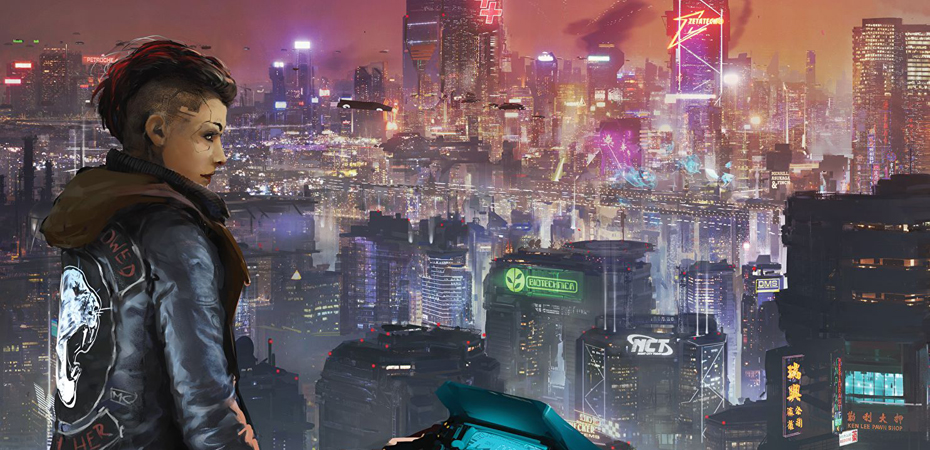
It’s been a long journey of gameplay trailers, controversies, delays, and leak dodging, but Cyberpunk 2077 is finally coming out in just a few short days. For real this time! While some of their marketing choices have been… less than stellar, the game looks absolutely fantastic and as a big fan of this kind of setting I’m pretty excited. If you didn’t know, it’s based on a long running tabletop RPG simply called Cyberpunk. Even aside from the game it’s based on, the broader cyberpunk genre has a long history, so why don’t we take a look at where this all came from?
Cyberpunk as a term was coined in the early 80s by Bruce Bethke, but the genre as we know it today has origins dating back even farther to the New Wave authors of the 60s and 70s. Breaking tradition and moving away from the focuses on the distant future and hard science fiction, New Wave authors such as Philip K Dick and Harlan Ellison tended to zoom in on something a little closer to home. They would take influences from the sexual revolution and drug culture and touch on themes of social isolation and class divide. Most prominently in the pages of the magazine New Worlds, this movement was instrumental in laying the groundwork for what would later be called cyberpunk.
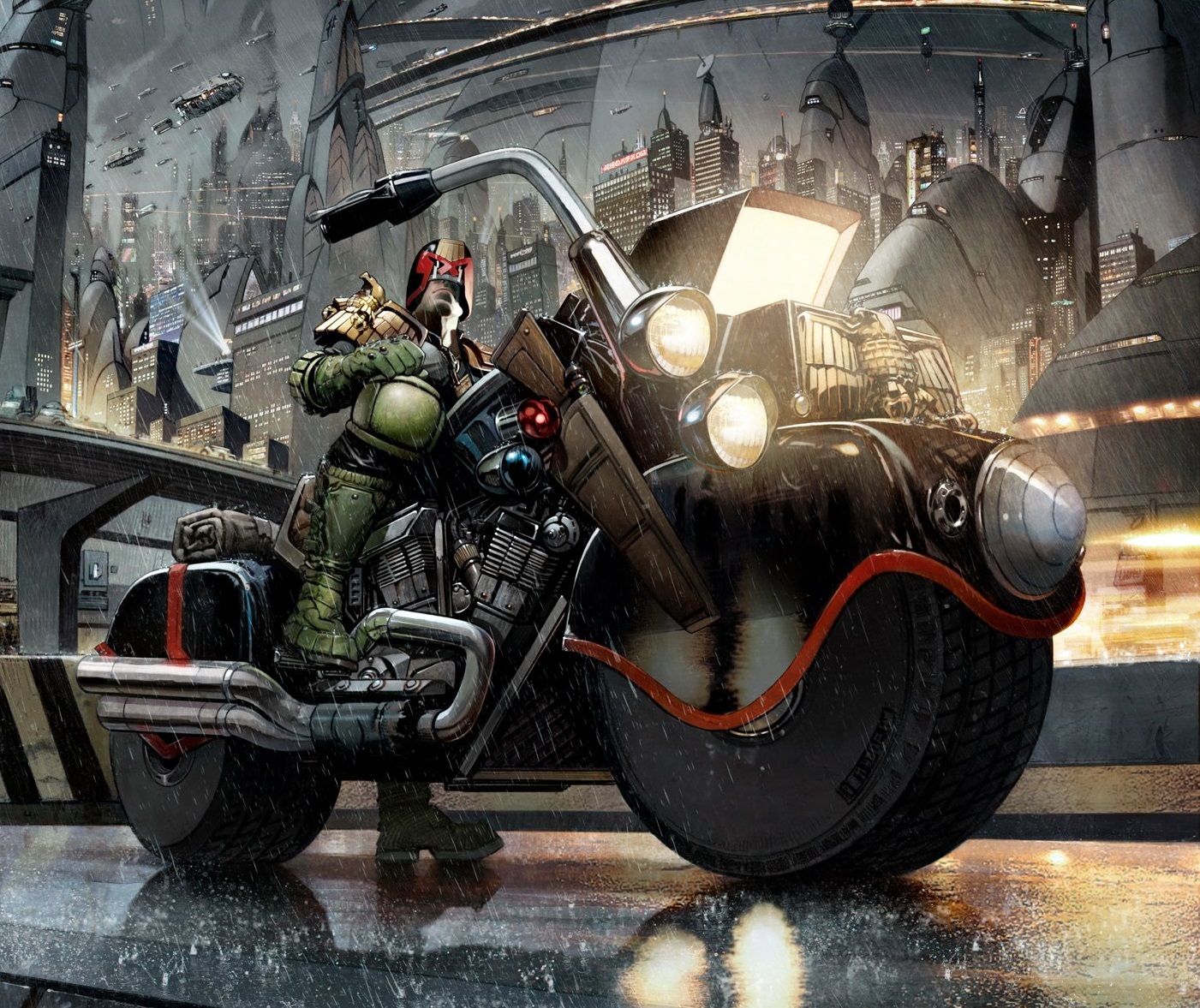
In the world of comics, 1977 would see the launch of the weekly British title 2000 AD, featuring the character Judge Dredd. Originally named as a reference to ska and reggae musician Alexander Minto Hughes, Dredd was the Dirty Harry archetype taken to the extreme. In the world of Mega-City One, the Street Judges are basically the police, the judges, and the executioners all in one. With an unwavering devotion to the law, Dredd is a fascist. He is a violent satire of the more subtle propaganda that exists throughout our media and a reminder that the system is not to be trusted. Mega-City One is a mix of advanced technology and urban decay that sits alone as a monolith in the great desert expanse known as the “cursed Earth”. This is a really grim and nihilistic vision of the future, but a perfect example of the “high tech, low life” slogan that cyberpunk has been described with.
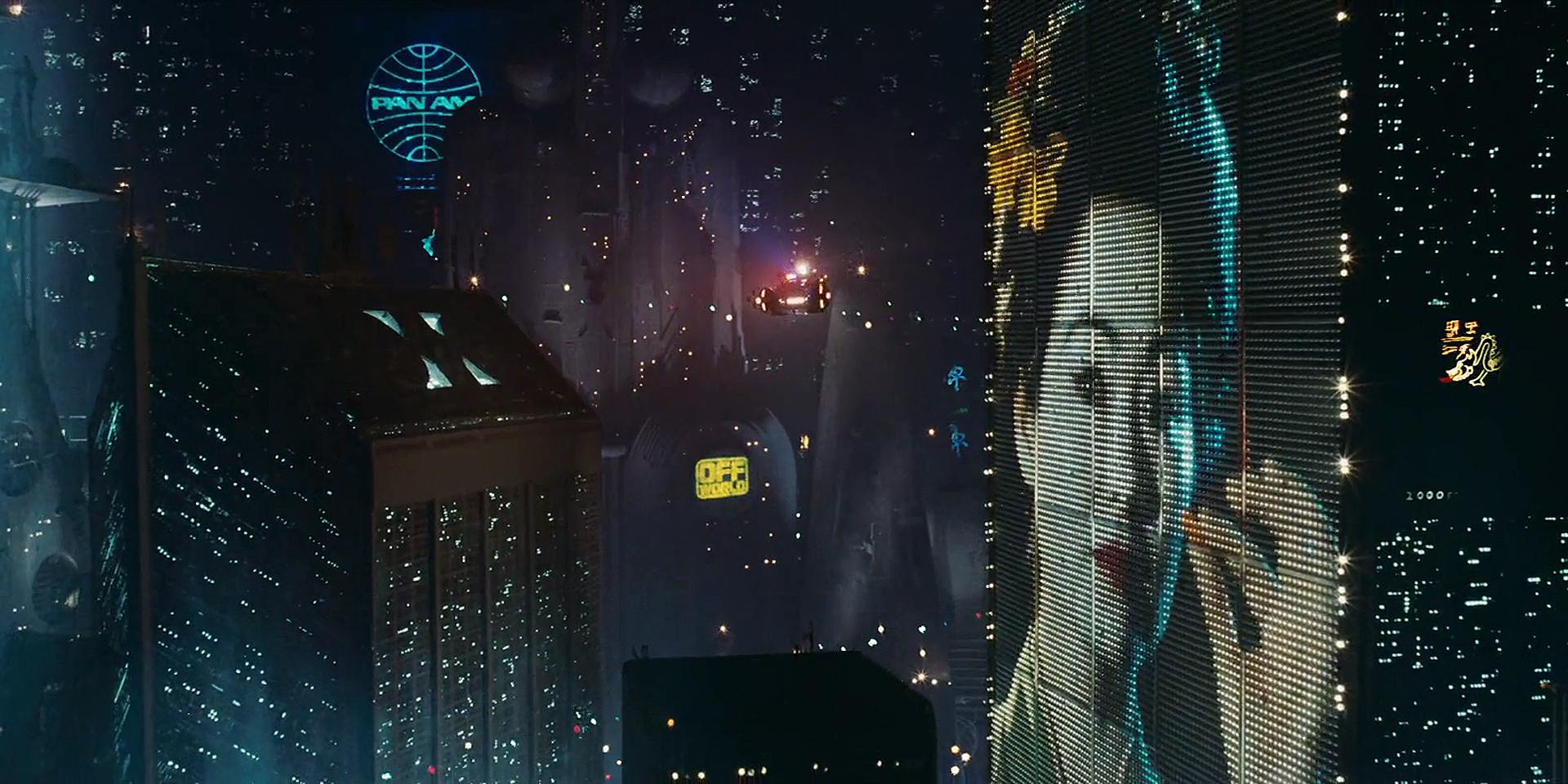
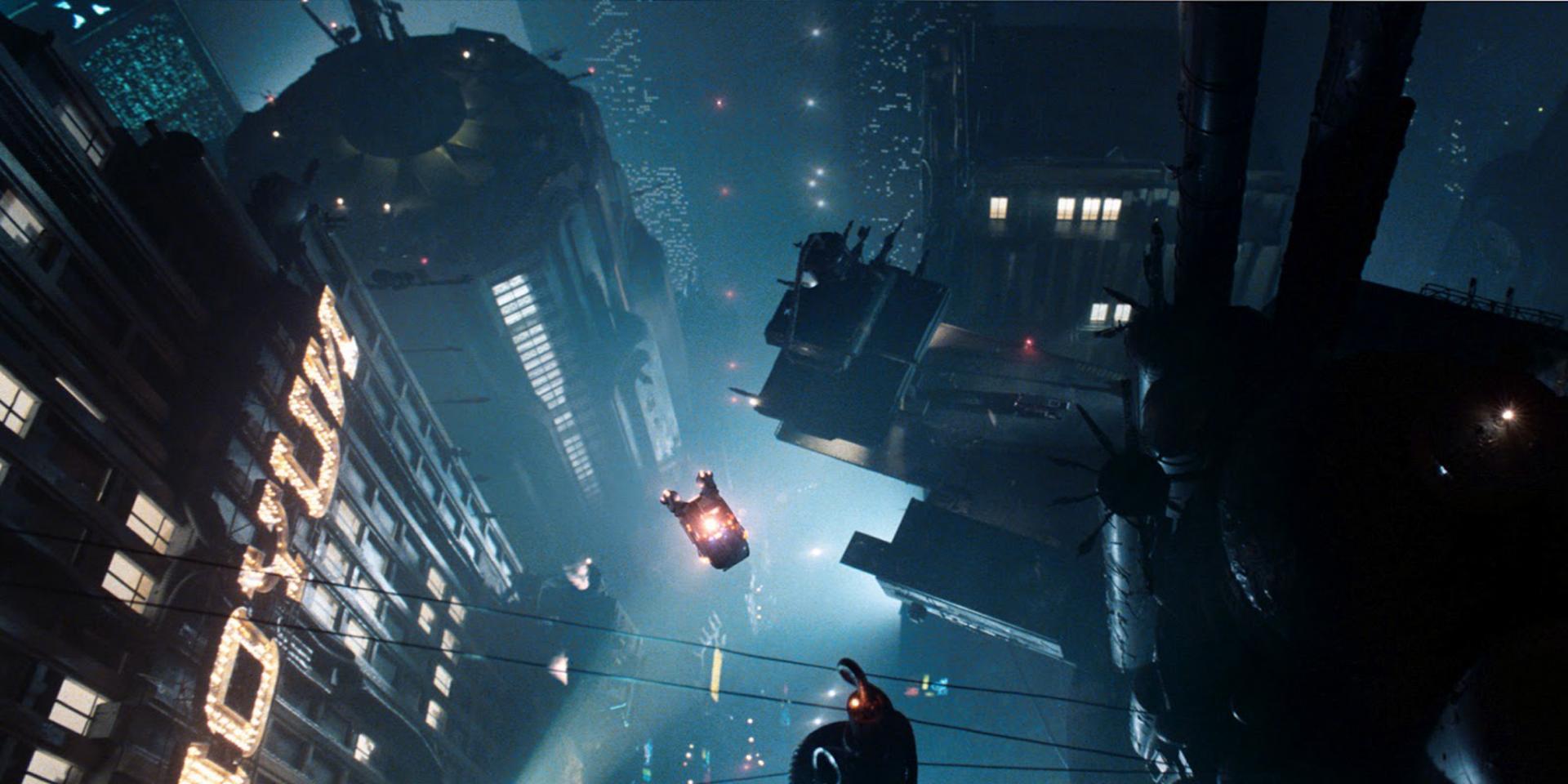
When it comes to cinema, Blade Runner is the one that really kicked things off. An adaptation of Philip K Dick’s novel Do Androids Dream of Electric Sheep? by Alien director Ridley Scott, this was really the first time that we got to see exactly what this dystopian vision of the near-future could be. Set in a techno-hellscape version of Los Angeles, the city is massive and dark. The constant glow of neon signs cut through the thick smog in the air. It exists as a mix of near-future technology and outdated (even at the time) fashion and decor. Obviously the influence of film noir is all over the movie and Harrison Ford’s Deckard looks like he just walked off the set of The Maltese Falcon, but there are images all over the city from a hodgepodge of different cultures and eras.
The plot centers around the titular runner of blades Deckard and his mission to hunt down four Nexus-6 replicants and “retire” them. Replicants are bioengineered androids created to be used as slave labor on off-world colonies. The Nexus-6 variety only have a lifespan of four years, and that’s what sets Roy, Pris, Zhora, and Leon off on their mission to track down their literal maker in the first place.
The film opens with Leon taking a Voight-Kampff test, designed to measure emotional responses to determine whether or not the subject is a replicant, immediately instilling in the viewer the idea that what separates “us” from “them” are our emotions and ability experience empathy. The Nexus-6 models spend the first half of the movie acting like violent psychopaths, adding credence to this idea. Then we are introduced to Rachel, a replicant who doesn’t even know that she is one and between spending time with her, peeling back the layers on our villains, and seeing hints that Deckard may even be a replicant himself, we begin to see the lines that divide us become increasingly blurred. In the end, we’re reminded that Roy’s gang went rogue for the simplest and most human reason possible. They just didn’t want to die.
Over on the other side of the world, Japan was presenting its own vision of the future via Katsuhiro Otomo’s anime masterpiece Akira and it’s city of Neo-Tokyo. The manga (also written and illustrated by Otomo) had been running since 1982 and wouldn’t finish until 1990, but it was the film that changed everything and paved the way for subsequent cyberpunk works like Ghost in the Shell and Battle Angel Alita. On top of that, it pretty much single-handedly kicked off the massive influx of anime getting dubbed and sent over to the West. The cultural importance of this one cannot be downplayed.
As far as Neo-Tokyo itself is concerned, I would consider this the prototypical cyberpunk metropolis, even more so than the Blade Runner vision of Los Angeles. It’s the cite of a catastrophic nuclear-level disaster and it’s a city that is struggling just to survive. Gang violence in the streets, overly militarized police, active civil unrest, and secret government experiments are all hallmarks of the genre. Everything is on the brink of collapse, and as the movie and the manga go on… everything does.

So we’ve looked at a few examples here from various parts of the world, but they all line up pretty neatly. Aesthetically, cyberpunk is a neon-soaked hellhole. It looks like Detroit meets Tokyo and it’s full of robots and gang wars. Cyberpunk is full of outsider protagonists rising up against oppressive systems, be they government or corporate. Blade Runner deals with questions of what it means to be human as well as class divide. Judge Dredd is a satire of the oppressive militarization of police. Akira is about a city that’s just trying to hold on. I think this is why it’s resonated for so long. Cyberpunk is just such a fitting genre name because it matches both the excitement of all the wild future tech as well as the rebellious outsider perspective.
That’s my take on it, at least. Now if you’ll excuse me I have a thousand hours to sink into a video game.
 The Wasteland Digest